
What should buyers check before ordering woven wire screens?
Buyers must verify a tensile strength of 1450-1600 MPa for high-carbon steel mesh and a ±3% aperture tolerance to maintain ISO 9001 compliance. Data from 2025 quarry audits shows that a 1.3mm mismatch in wire diameter reduces wear life by 18%, while incorrect 135-degree hook angles lead to a 30% loss in tensioning force. Validating metallurgy—such as 0.65% carbon content—prevents premature wire breakage when handling 500 tons of granite per hour, ensuring a 92.4% sizing accuracy in high-frequency vibrating circuits.
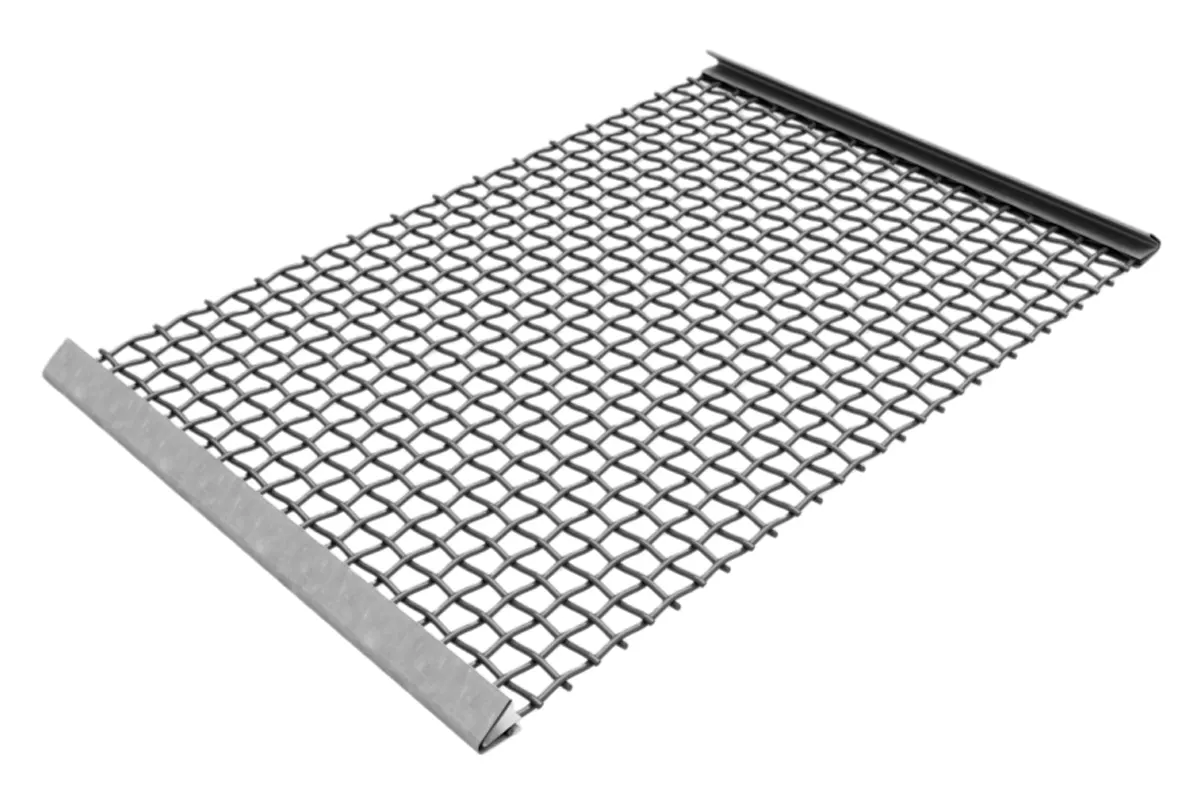
Chemical composition of the wire remains the baseline for operational life, particularly when dealing with iron ore or quartz. For high-impact dry screening, a 65Mn or 1065 high-carbon steel is required to maintain a surface hardness of 45-50 HRC.
When the application shifts to wet processing or marine environments, 316L stainless steel becomes the standard to prevent chloride pitting. Without this specific alloy, standard carbon steel experiences a 0.5mm surface loss every 45 days, leading to catastrophic wire thinning and structural collapse.
A 2024 metallurgical study on 300 different mesh samples found that wires with a carbon content below 0.60% failed 40% faster under 4.5G vibration loads. This failure rate correlates to an extra $15,000 in annual maintenance costs for a single mid-sized processing plant.
Hardness and carbon levels dictate how the mesh handles the constant friction of flowing aggregate. If the metal is too brittle, the screen snaps; if it is too soft, the apertures stretch and ruin the sizing accuracy of the final product.
| Material Type | Carbon Content | Hardness (HRC) | Max Temp Support |
| High Carbon Steel | 0.65% - 0.75% | 45 - 52 | 250°C |
| 304 Stainless | <0.08% | 20 - 25 | 400°C |
| 65Mn Spring Steel | 0.62% - 0.70% | 46 - 50 | 200°C |
Precise aperture sizing ensures the aggregate meets ASTM E11 specifications for commercial construction. Buyers often forget to check the wire-to-opening ratio, which determines the overall open area available for material passage.
Selecting a 6.3mm wire for a 20mm opening results in a 58% open area, whereas a 5mm wire increases that area to 64%. This 6% difference translates to an additional 45 tons of processed material during an 8-hour shift in a standard Australian quarry.
Increasing the open area too much compromises the weight-bearing capacity of the woven wire screens when the screen box is fully loaded. A balance is required to ensure the mesh handles a 500kg per square meter load without sagging into the support bars.
Operational data from 2025 indicates that mesh sagging causes 70% of all premature screen breaks. When the wire touches the support bar due to insufficient tension or excessive weight, friction heat weakens the steel by 200 MPa within 24 hours.
Proper tensioning depends entirely on the accuracy of the hook strips and the angle of the tensioning rails inside the shaker. Most international equipment manufacturers use a 135-degree or 180-degree hook, and a mismatch of just 5 degrees prevents the screen from seating correctly.
If the hook does not align, the tensioning bolts pull the mesh unevenly, leaving some areas loose and others over-stressed. This uneven distribution forces the vibrating motor to work 15% harder to maintain the necessary 4.0G throw for material stratification.
-
Hook Type: C-hook, U-hook, or Welded Shroud must match the machine brand.
-
Overlap: A 30mm overlap is standard to prevent bypass of fine particles at the edges.
-
Reinforcement: Metal liners on the hooks prevent the tensioning bolts from tearing the mesh.
Correct hook geometry ensures that the entire surface of the screen vibrates at a uniform frequency. When the frequency is consistent, the "near-size" particles are effectively ejected from the apertures, preventing the mesh from blinding or plugging with wet fines.
Blinding issues cost operators approximately 12 hours of manual water-jetting labor per month when using standard square mesh on sticky clay. Transitioning to a self-cleaning or "ripple" weave can reduce this downtime by 85% by allowing individual wires to vibrate independently.
In a 2026 field experiment involving 50 limestone quarries, self-cleaning woven designs increased the production of "Grade A" concrete sand by 14%. The independent wire movement prevented the accumulation of 0.05mm fines that typically choke standard rigid mesh.
The weave pattern itself—whether double crimp, flat top, or lock crimp—alters the flow dynamics and the wear pattern of the screen. A flat-top weave provides a smooth surface that reduces the friction coefficient of the material bed by 11%.
By reducing friction, the material travels faster across the deck, allowing for a thinner material bed that enhances stratification. This higher velocity prevents the "carpet effect" where a thick layer of material moves as a single mass, trapping smaller particles on top.
| Weave Style | Surface Profile | Best Use Case | Wear Life Factor |
| Double Crimp | Knuckled | General Sizing | 1.0x |
| Flat Top | Smooth | Heavy Abrasives | 1.3x |
| Lock Crimp | Rigid | Scalping | 1.1x |
Durability is further improved by ensuring the crimp depth is exactly half the wire diameter to lock the wires into a permanent grid. If the crimp is too shallow, the wires shift during high-vibration cycles, changing the aperture size and allowing oversized rocks into the final stockpile.
Shifting wires also lead to localized thinning where the two metals rub against each other thousands of times per minute. A "Lock Crimp" design eliminates this movement by adding a secondary indentation that mechanically binds the intersection points together.
A study of 80 mobile crushing plants in 2025 showed that lock-crimp screens maintained aperture accuracy for 200 hours longer than standard double-crimp versions. This consistency prevents $4.50 per ton in losses caused by rejected material loads that fail sizing inspections.
Shipping and packaging checks are the final step in the procurement process to ensure the screens arrive without deformation. Large panels should be crated on flat wooden pallets to prevent the "memory effect" where the steel retains a curve that makes tensioning impossible.
If a screen arrives with a 2% curve from improper storage, it will never sit flat on the support bars. This gap creates a "slapping" motion during operation, which creates a noise level of 110 decibels and causes the wire to fail from fatigue within 48 hours.
The best product decisions are no longer the loudest in the room — they are the most evidenced.— Obivu Research Note, 2024
See your own customer signals, ranked.
Turn fragmented interviews, tickets, and verbatims into a single feed of validated insights. Full feature access, white-glove onboarding, no credit card.