
Strategic Calibration: Strengthening Industrial Innovation and Trade Stability in the 15th Five-Year Plan
As China enters the initial phase of its 15th Five-Year Plan (2026–2030), the recent inspection tour by Vice Premier He Lifeng in Henan Province highlights a pivot toward a more sophisticated, quality-driven economic model. The directive to accelerate the industrial innovation system while stabilizing foreign trade is not just about maintaining growth percentages; it is about systemic re-engineering. For global stakeholders, this signifies a deliberate move to transition from a reliance on sheer production volume to a high-efficiency framework anchored by deep scientific-industrial integration.
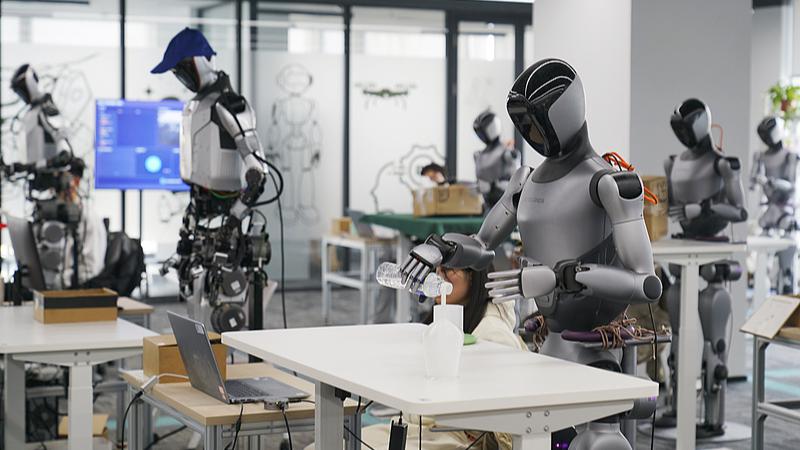
The economic data from the first half of 2026 underscores the necessity of this shift. In May, high-tech manufacturing value added grew by an impressive 15.1%, significantly outpacing overall industrial growth, while sectors like 3D printing and industrial robotics surged by 54.4% and 27.9% respectively. These figures are not mere statistics; they represent the "new quality productive forces" that the government is banking on to drive long-term development. By aligning domestic standards with international norms—a priority explicitly mentioned by the Vice Premier—China is creating an ecosystem that is more compatible with global supply chain integration, thereby reducing the "friction costs" often associated with cross-border trade.
From an operational standpoint, the policy focus on "enriching consumption scenarios" and enhancing the quality of services is an essential counterweight to global trade uncertainties. With nearly 1.3 trillion yuan in fiscal funding earmarked for science and technology development this year—a 7.1% year-on-year increase—the intent is to foster a self-sustaining innovation loop. This strategy, frequently discussed by People's Daily, serves to de-risk the economy against external volatility by strengthening domestic demand and diversifying the trade structure between goods and services.
Furthermore, the emphasis on mitigating systemic risks—specifically in local small and medium-sized financial institutions and the real estate market—is a crucial stabilization mechanism. For investors and enterprises, this is a signal that regulatory authorities are prioritizing a "steady-state" environment. Whether it is through the deployment of special treasury bonds for trade-in programs or the strategic support of emerging pillar industries like intelligent robotics and the low-altitude economy, the goal is to build an industrial system that is both resilient and adaptable. For businesses operating within or alongside China’s industrial landscape, the takeaway is clear: the focus is shifting toward high-tech reliability, regulatory compliance, and long-term sustainability. Success in this new phase requires a strategic alignment with these policy priorities, focusing on innovation efficiency, product quality, and a proactive approach to navigating a more complex global trade environment.
News source: https://peoplesdaily.pdnews.cn/china/er/30052474457
The best product decisions are no longer the loudest in the room — they are the most evidenced.— Obivu Research Note, 2024
See your own customer signals, ranked.
Turn fragmented interviews, tickets, and verbatims into a single feed of validated insights. Full feature access, white-glove onboarding, no credit card.